A robot can run on renewable electricity, but the energy still has to reach its motors at the right time. Solar panels, wind turbines, hydropower, batteries, and fuel cells each solve a different part of that job.
For a warehouse manager, farm operator, or robot builder, the useful question is practical: where does the power come from, how is it stored, and what happens when the source stops producing?
- Renewable electricity can charge a robot’s battery through a normal charging system.
- Solar panels can power small robots directly, though their surface area limits output.
- Batteries and hydrogen storage cover periods when sunlight or wind is unavailable.
Start with the power source
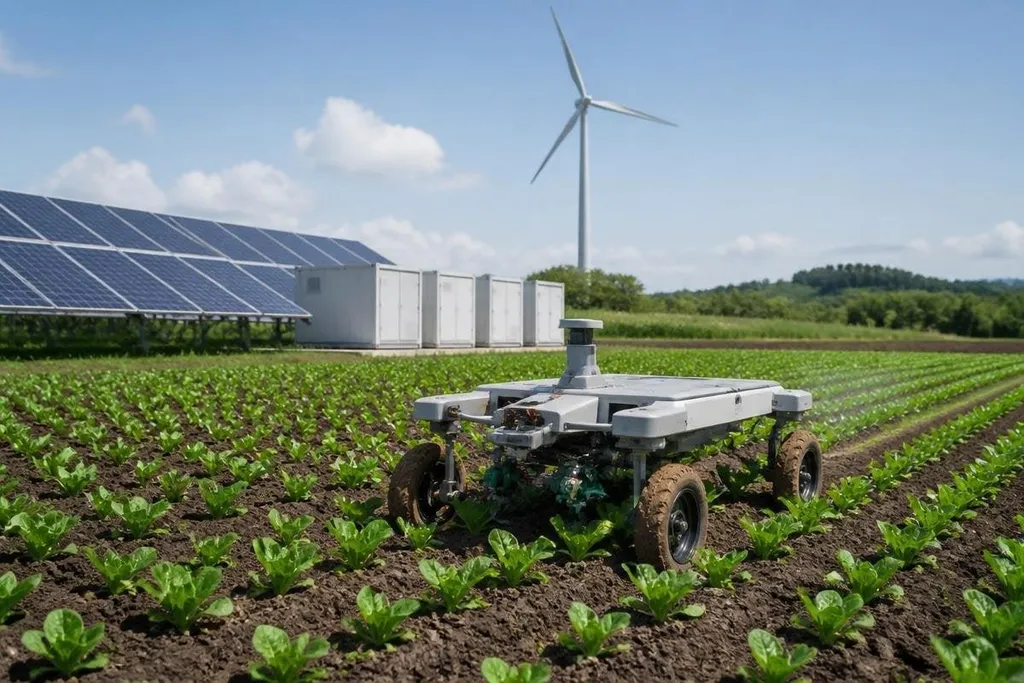
Solar power is the most direct option for a small autonomous system. Photovoltaic cells turn sunlight into electricity, which can feed a motor controller or charge a battery. Its frame has more room for panels when it has a large top surface than when it is a compact inspection machine with sensors, antennas, and a narrow frame.
That physical limit matters. The robot may use more energy to move, sense its surroundings, and communicate than its panels can produce during a work cycle. Solar panels can help extend runtime, but they may not replace a charging station.
Wind and hydropower usually work at a fixed site rather than on the robot itself. A wind turbine or hydro system sends electricity to a local network, where a charging unit stores that energy in the robot’s battery. The robot then runs on stored electricity, even when the turbine is still or the water flow changes.
Storage decides when the robot works
Most mobile robots need batteries because their motors draw power in bursts. Starting, lifting a load, climbing a slope, or moving over rough ground can use more electricity than steady travel. The battery has to supply those bursts without a large drop in voltage.
A charging system can draw renewable electricity when it is available and store it for later.
Software can schedule charging during periods of high solar output, while a site battery can hold extra electricity for several robots. That setup also reduces the need to stop a robot each time a cloud passes over a solar array.
Hydrogen fuel cells take a different route. They turn stored hydrogen into electricity through an electrochemical reaction, with water and heat as outputs. A fuel-cell robot still needs electric motors and control hardware, but refueling can take a different form from plugging in a battery.
The storage method must fit the work. Batteries suit robots that return to a known dock. Hydrogen may suit machines that work far from a charging point, but the full system needs hydrogen production, storage, delivery, and safety controls.
The robot has to manage its own demand
Renewable power works better when the robot uses less energy for the same task. A slower drive speed, a lighter payload, lower motor losses, and a planned route can reduce the load on the battery. Sensors and onboard computers also consume electricity, so the control system matters alongside the motors.
A machine can change its behavior when energy falls. It might return to its dock, delay a non-urgent task, reduce speed, or send an alert to an operator. Those actions only help if the robot has enough stored power to reach a safe location.
The power source still has to match the robot’s route, battery size, and charging plan. Renewable energy robotics coverage can help you compare those details before looking at where solar and wind power fall short.
Where renewable power falls short
Renewable energy does not remove the need for electrical planning. A site still needs chargers, wiring, power conversion, battery monitoring, and a safe place for storage. Weather can reduce solar or wind output, while a busy fleet can consume stored energy faster than the site replaces it.
I’d treat direct solar power as a useful support for many mobile robots, not a complete answer. The panel area, payload, task length, and weather all set limits that a product brochure cannot change.
For a planned deployment, check these points before choosing the energy system:
- Measure the task: record travel time, payload, slope, stops, and motor load.
- Size the battery: leave enough stored power for the return trip and a safe shutdown.
- Check the source: compare expected solar, wind, or hydro output with the robot’s work schedule.
- Plan the dock: place charging where the robot can reach it without blocking people or vehicles.
- Add a fallback: decide what happens during poor weather, a charger fault, or an empty battery.
The next step is not to label a robot as renewable-powered. It is to match the power source, storage, charger, and daily task so the machine can finish its work when the weather changes.